Live Webinar
Court Reporting, Ethics & Harassment in an AI/Digital World!
Oct 17, 2026
Nov 14, 2026
Only $149 — Save $50!
Register Now
There are questions that seek information.
There are questions that seek truth.
And then there are courtroom questions that—if you read them back slowly—basically answer themselves, confuse everyone equally, or accidentally create a brand-new meaning nobody asked for.
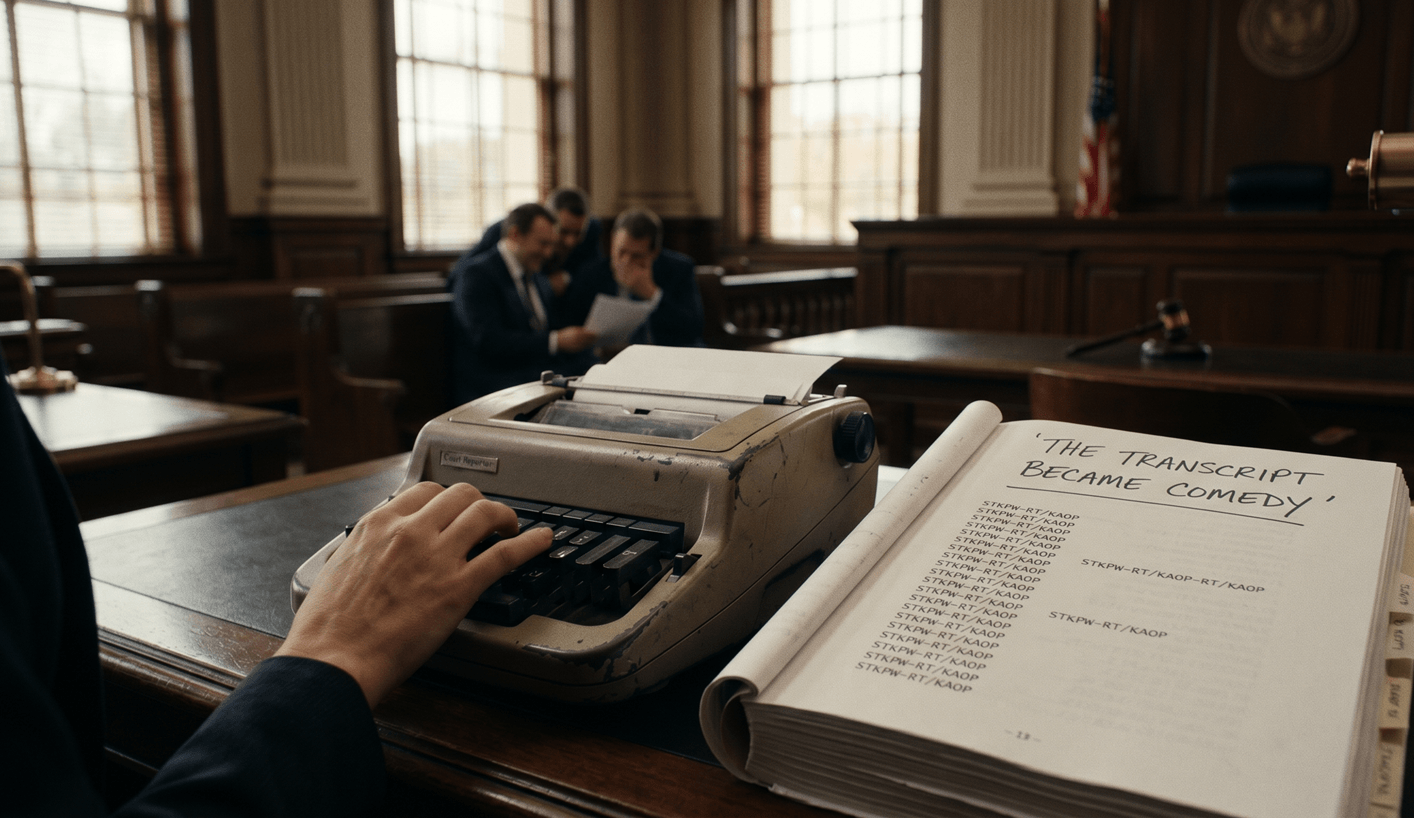
These are the moments where the courtroom stays serious… but the transcript quietly becomes comedy.
And the court reporter? They do the hardest job in the room: keep the record straight while the language tries to take a detour.
Below are a few real transcript gems that prove sometimes the funniest thing in court isn’t the answer.
It’s the question.
Q. Did you ever stay all night with this man in New York?
A. I refuse to answer that question.
Q. Did you ever stay all night with this man in Chicago?
A. I refuse to answer that question.
Q. Did you ever stay with this man in Miami?
A. No!
Well I guess that answered that question.
Court reporter takeaway: Wait long enough and the question may answer itself.
Q: What is your relationship with the plaintiff?
A: She is my daughter.
Q: Was she your daughter on February 13, 1979?
Somewhere, a calendar just sighed.
This is one of those questions that sounds “careful” in the attorney’s head… but reads like the lawyer briefly suspected daughters come with an expiration date.
It’s funny because it’s technically framed like a legal clarification, but in everyday language it becomes:
“So… was she still your daughter that day?”
Court reporter takeaway: the transcript preserves exactly how a question lands. Even when the intent was legal precision, the record shows the accidental weirdness that came with it.
Q. And lastly, Gary, all your responses must be oral. O.K.? What school do you go to?
A. Oral.
Q. How old are you?
A. Oral.
This is courtroom logic at its purest: “You said oral, so I’m giving you oral.”
It’s not disrespect. It’s not sarcasm. It’s a literal interpretation delivered with confidence.
And it’s a perfect example of why clear wording matters—especially with younger witnesses or anyone answering under pressure.
Court reporter takeaway: when instructions and questions blur together, the transcript becomes the only place that shows why the confusion happened.
Q. And what is your marital status?
A. Fair.
Not “single.” Not “married.” Not “divorced.”
Just… fair.
That answer is funny because it’s honest in a way the form didn’t ask for. The witness heard “describe your situation” instead of “check a box.”
Court reporter takeaway: people don’t always respond to the legal meaning of a word—they respond to the human meaning. The record has to capture what they actually said, not what the form wished they said.
It’s easy to treat these as pure entertainment, but they highlight something practical:
Courtrooms run on language.
Language is messy.
And small wording choices can change:
what a witness thinks you asked,
what an answer sounds like later,
and how clearly the facts come through on the page.
That’s why court reporting is such a valuable profession. A clean transcript doesn’t just capture jokes—it captures misunderstandings, tone shifts, and the exact wording that caused the whole moment.
And that’s also why continuing education matters. Better skill means a cleaner record when testimony gets:
Next time, we’ll feature the courtroom’s favorite combo: a question asked with confidence, answered with confidence, and somehow both of them heading in completely different directions.
Because sometimes the transcript doesn’t just record the facts.
It records the moment language gave up.
Join us online for our newest 10-hour program. Two dates available — pick the one that works for you. NCRA/NVRA approved and pre-qualified for CEU credit in all states.
Register Now & Save $50